Study electronic music production, DJing and live performance in France
12 weeks. One creative journey. From studio to stage.
Immersive. Practice-based. On campus.
3 months. One professional project. A career accelerator.
Create original tracks, develop your DJ or live set, define your artistic identity and learn how to bring your music to an audience.
Taught entirely in English at 3iS Bordeaux, this intensive 12-week program combines electronic music production, DJing, live performance, artist development and music business.
You will work in professional studios and performance spaces, develop your own music from the first week, collaborate with other artists and finish the program by performing at the 3iS Electronic Music Showcase.
Campus
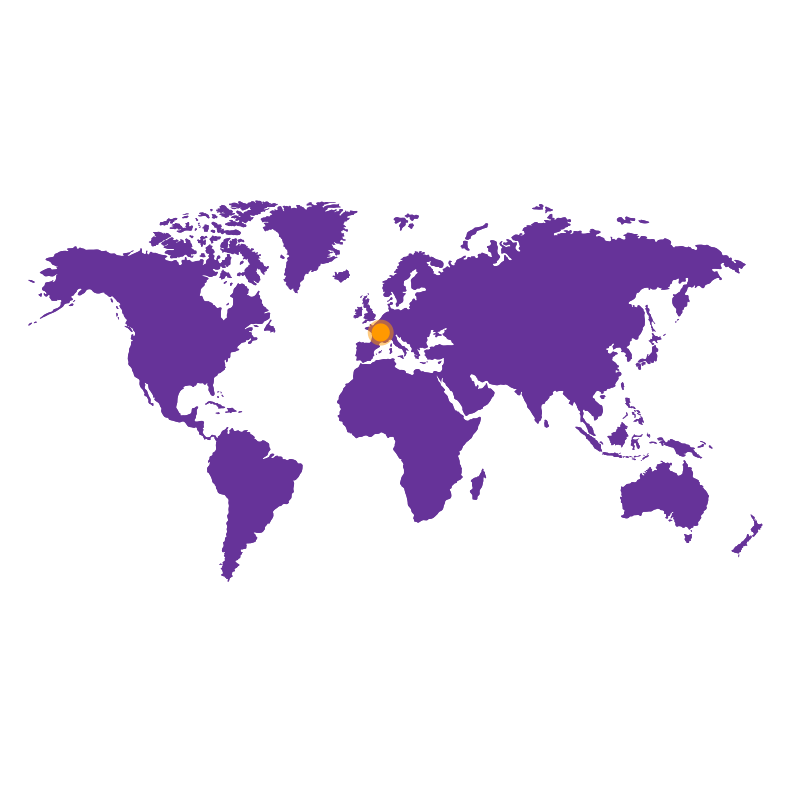
Bordeaux
Entry requirements
No specific qualification is required to join the program. Some previous experience in music, DJing, artistic practice or production — including self-taught experience — is recommended. A good command of English is required to follow the course and participate fully in collaborative projects. Admission is based on application and interview. Applicants wishing to undertake the RNCP competency block offered alongside the program must meet the access requirements of the relevant certification. They must hold a French baccalaureate, a Level 4 certification or an international qualification recognized as equivalent.
Certification
On successful completion of the program, participants receive a 3iS certificate. Eligible participants may also prepare for the validation of RNCP39888BC04 – “Superviser la post-production sonore d’un projet”, a competency block within the Level 6 professional certification “Ingénieur du son”, registered in France’s National Register of Professional Certifications (RNCP) and awarded by 3iS. Validation of the competency block is subject to the eligibility and assessment requirements set out in the certification framework. The RNCP competency block complements the program’s broader 3iS-specific teaching in Electronic Music Production, DJing, Live Performance and Artist Development.
At a glance
Duration
12 weeks
Languages
English
Dates
Summer Session: 10 May - 30 July 2027 / Autumn Session: 6 September - 26 November 2027
Pace
Full Time
Study format
On-Campus
Tuition fees - Non-French tax residents
€5,900 / Includes access to professional studios, DJ and live-performance facilities, project-based training, and participation in the 3iS Electronic Music Showcase. 3iS Creative Talent Scholarships may be awarded on a selective basis to applicants with particularly promising artistic potential or a strong creative project. Professional training funding may also be available depending on the applicant’s status and the eligibility of the program.
This program is designed for emerging artists, DJs, producers, beatmakers and musicians, as well as students, recent graduates and professionals looking to structure, professionalise or accelerate an electronic music project.
It is particularly suited to participants who already experiment with music production, DJing, composition or performance and want to spend 12 intensive weeks developing both their creative practice and professional direction.
You may want to:
From idea to track
Turn musical ideas into finished electronic productions while developing your own sound.
You will work on:
Track analysis and reference productions will help you understand how electronic music is structured and what makes a production effective and distinctive.
Objective: produce finished tracks ready to be performed, presented or released.
From selection to connection
DJing is approached as both a technical and artistic practice.
You will learn how to select music, construct a set, shape energy and respond to an audience while developing a style that reflects your own musical identity.
You will work on:
You will explore different setups, including turntables, digital players, controllers and hybrid solutions.
Objective: prepare and perform a technically reliable, musically coherent DJ set with its own artistic character.
From studio to stage
How does a track created in the studio become a live experience?
You will learn how to adapt your productions for performance and design a setup that suits your music and artistic direction.
You will explore:
Objective: develop a live performance that extends your artistic identity rather than simply reproducing your studio tracks.
From sound to identity
Define how your project looks, feels and communicates.
You will explore the relationship between music, image, message and performance through:
The aim is not to manufacture an image, but to make what is distinctive about your artistic proposition clear, coherent and recognisable.
Objective: build an artistic identity that audiences and industry professionals can understand and remember.
From music to audience
Learn how music reaches audiences, professionals and opportunities.
You will explore the roles of:
Topics include:
You will also learn how to pitch your project, identify relevant professional contacts and begin building your network.
Objective: connect your creative ambitions with a realistic strategy for developing your artist project.
Create with others
Electronic music is also a culture of collaboration, exchange and experimentation.
You will take part in:
You may work with producers, DJs, vocalists, instrumentalists and creators from other disciplines.
Cross-disciplinary projects may also explore connections between music, image and performance.
Participants may have opportunities to take part in the 3iS Mini-Fest and other concerts or campus events, working in live conditions alongside students from other 3iS disciplines.
Objective: develop the creative and professional skills required to collaborate effectively with others.
The Core Artist Project
Build your project throughout the 12 weeks
Your own artistic project connects every part of the program.
Six dimensions progressively come together:
Productions, musical direction and sonic identity.
Music selection, DJing and audience connection.
Performance format, stage setup and adaptation of your music.
Creative direction, image and professional presentation.
Release, communication and community development.
Goals, network and professional development strategy.
Each module contributes directly to one or more of these dimensions, allowing your project to evolve continuously throughout the program.
Final project
From studio to stage
At the end of the program, you bring together the work developed over the 12 weeks.
Your final project includes:
For eligible participants preparing the RNCP competency block, the production work also includes the editing, mixing and preparation of audio files required to demonstrate the relevant competencies.
3iS Electronic Music showcase
Your music. Your stage.
The program ends where electronic music comes fully to life: in front of an audience.
At the 3iS Electronic Music showcase, each participant presents their project and performs using the format developed during the program — a DJ set, electronic live set or hybrid performance.
The showcase gives you the opportunity to perform in real conditions, connect with an audience and present your work to invited music industry professionals.
Career opportunities
The program is primarily designed for participants who want to develop their own artist project, while gaining skills that can also be applied professionally across the electronic music sector.
Depending on previous experience and individual goals, participants may develop activities as:
The skills developed can also support entry-level opportunities in areas such as artist development, labels, music project coordination and the wider music industry.
For artists and DJs who are already active, the program can act as an accelerator to strengthen production skills, professionalise live performance, clarify artistic direction and take their project to the next stage.
An electronic artist is no longer built in the studio alone. You need to find your sound, understand how to perform it, develop a clear artistic identity and know how to connect with an audience.
Over 12 weeks, we help each participant bring these different dimensions together. The aim is not to create artists who all look or sound the same, but to give each person the tools to identify what makes them distinctive — and learn how to make that heard.
Lissa Meridan – Program Director, Sound & Music
Studio. Booth. Stage.
Move between music production, DJing and live performance rather than learning them separately.
What you create in the studio can be tested behind the decks, adapted for live performance and brought directly to the stage.
Your own music provides the thread running through the entire 12 weeks.
Rather than completing disconnected exercises, you apply what you learn directly to your productions, performance and artistic direction from the first week.
Explore different ways of performing electronic music, from DJ sets to controllers, hardware, electronic instruments, stems, Ableton Live and hybrid setups.
You will identify the performance format that best suits your music and artistic identity.
Produce, record, mix, experiment and rehearse using the studios, control rooms, audio equipment and performance spaces at 3iS Bordeaux.
Join an English-taught program in Bordeaux and work alongside participants with different musical cultures, references and creative influences.
Collaboration and exchange are an integral part of the learning experience.
The program culminates in the 3iS Electronic Music Showcase, where you present and perform your work in front of an audience and invited industry professionals.
By the end of the program, you will have developed:
Original electronic music productions ready to perform, present or release.
A DJ set, electronic live set or hybrid performance developed and rehearsed for the stage.
A stronger sonic signature, creative direction and visual world.
Content and tools to present your project clearly to audiences and industry professionals.
An initial roadmap for distribution, communication, audience development and professional growth.
Connections with fellow artists, collaborators and music industry professionals.
And above all, you will have the opportunity to perform your project live at the 3iS Electronic Music Showcase.
From idea to track
Turn musical ideas into finished electronic productions while developing your own sound.
You will work on:
Track analysis and reference productions will help you understand how electronic music is structured and what makes a production effective and distinctive.
Objective: produce finished tracks ready to be performed, presented or released.
From selection to connection
DJing is approached as both a technical and artistic practice.
You will learn how to select music, construct a set, shape energy and respond to an audience while developing a style that reflects your own musical identity.
You will work on:
You will explore different setups, including turntables, digital players, controllers and hybrid solutions.
Objective: prepare and perform a technically reliable, musically coherent DJ set with its own artistic character.
From studio to stage
How does a track created in the studio become a live experience?
You will learn how to adapt your productions for performance and design a setup that suits your music and artistic direction.
You will explore:
Objective: develop a live performance that extends your artistic identity rather than simply reproducing your studio tracks.
From sound to identity
Define how your project looks, feels and communicates.
You will explore the relationship between music, image, message and performance through:
The aim is not to manufacture an image, but to make what is distinctive about your artistic proposition clear, coherent and recognisable.
Objective: build an artistic identity that audiences and industry professionals can understand and remember.
From music to audience
Learn how music reaches audiences, professionals and opportunities.
You will explore the roles of:
Topics include:
You will also learn how to pitch your project, identify relevant professional contacts and begin building your network.
Objective: connect your creative ambitions with a realistic strategy for developing your artist project.
Create with others
Electronic music is also a culture of collaboration, exchange and experimentation.
You will take part in:
You may work with producers, DJs, vocalists, instrumentalists and creators from other disciplines.
Cross-disciplinary projects may also explore connections between music, image and performance.
Participants may have opportunities to take part in the 3iS Mini-Fest and other concerts or campus events, working in live conditions alongside students from other 3iS disciplines.
Objective: develop the creative and professional skills required to collaborate effectively with others.
The Core Artist Project
Build your project throughout the 12 weeks
Your own artistic project connects every part of the program.
Six dimensions progressively come together:
Productions, musical direction and sonic identity.
Music selection, DJing and audience connection.
Performance format, stage setup and adaptation of your music.
Creative direction, image and professional presentation.
Release, communication and community development.
Goals, network and professional development strategy.
Each module contributes directly to one or more of these dimensions, allowing your project to evolve continuously throughout the program.
Final project
From studio to stage
At the end of the program, you bring together the work developed over the 12 weeks.
Your final project includes:
For eligible participants preparing the RNCP competency block, the production work also includes the editing, mixing and preparation of audio files required to demonstrate the relevant competencies.